
LA BIENAL DE VENECIA DE BOGOTÁ
Here is the English translation of the article from Periódico Arteria, maintaining its clear journalistic style and accurate terminology:
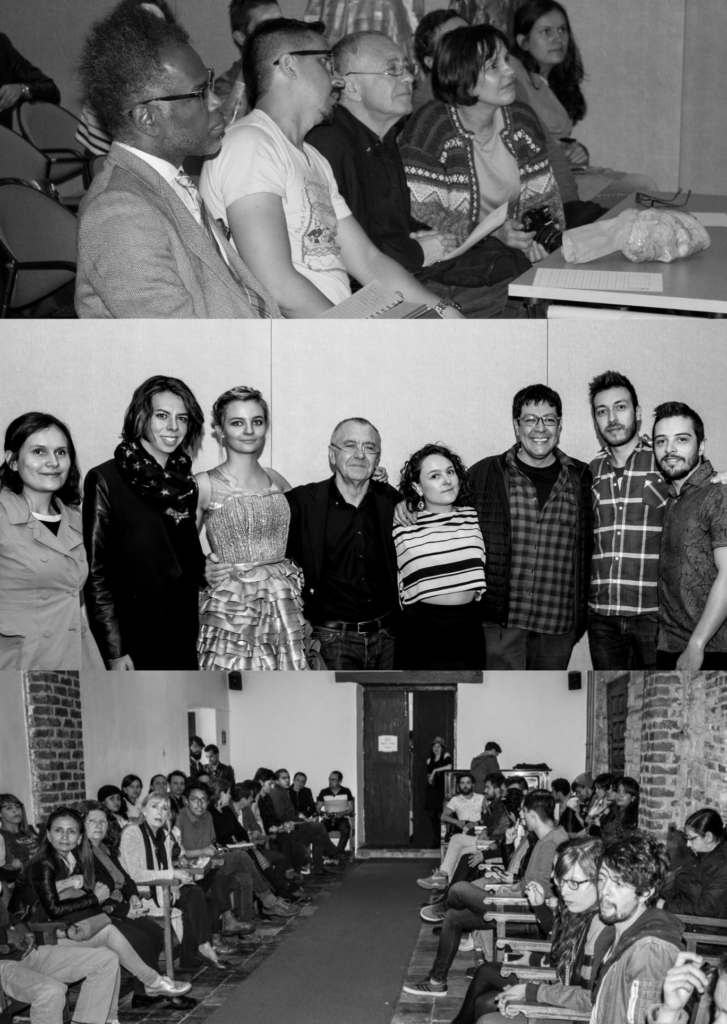
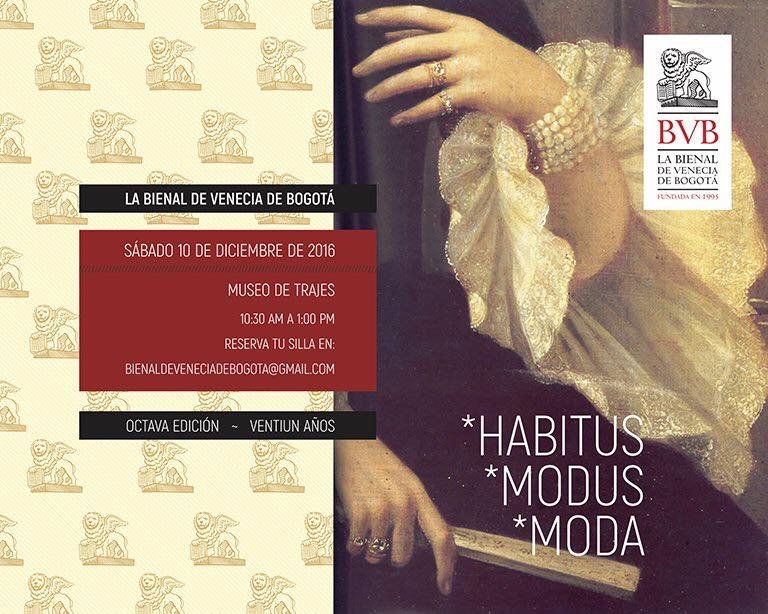
Fashion and art through three concepts: habits, modus, and fashion (moda), was the core proposal of the eighth edition of the Venice Biennial of Bogotá (Bienal de Venecia de Bogotá), held on December 10 at the Museum of Costumes (Museo de Trajes) in Bogotá. The six finalist collectives presented three outfits each.
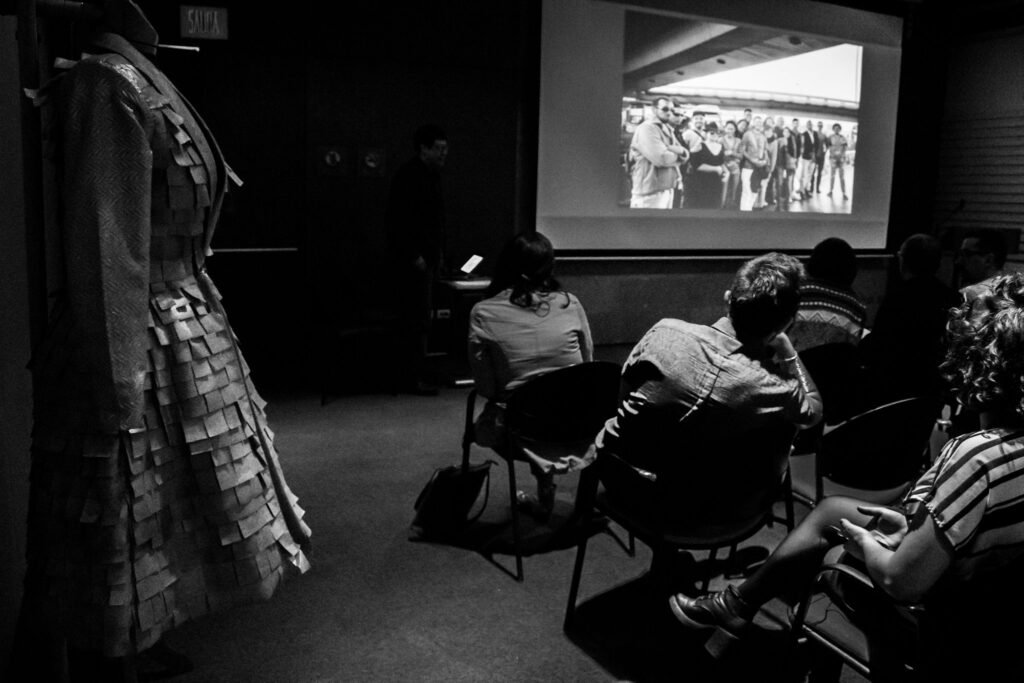
The runway show was complemented by an explanation of each outfit’s creative process and a fashion short film produced by each collective. Additionally, the garments were brought to commercial and industrial spaces in the Venecia and Alquería La Fragua neighborhoods.
During January and February, photographs of the event will circulate on social media, along with mediation activities hosted at the House of Culture of Tunjuelito (Casa de la Cultura de Tunjuelito). The awards ceremony for the winners will take place in February at a venue in the locality of Tunjuelito, to which the Venecia neighborhood belongs.
To structure the event, around 65 working sessions were conducted with the participating collectives. Initially, each team consisted of a visual artist, a fashion designer, a local neighborhood garment worker, and an assistant. Over time, additional collaborators joined in.
“I invited key figures from the fashion world, such as Hernán Zajar, as well as fashion historians—people with enough expertise to give these young creators the right tools,” says Franklin Aguirre, director of the event, referring to the Biennial’s development process. Everything was articulated to stimulate creative thinking.
Aguirre maintains that processes linked to fashion cause severe environmental pollution. Therefore, his proposal to the participants was to approach fashion critically and make these issues visible through art. Among the topics identified were sweatshops (maquilas), child labor, fast fashion, and the high levels of pollution generated by the fashion industry.
In this context, maquilas refer to factories where people work under precarious conditions for meager wages—a situation that has triggered multiple global scandals. “These situations are the consequence of an unregulated industry, highly complex networks, and the invasion of Chinese products into the system,” states Aguirre.
“Fast fashion” is a model where mass-market retail stores offer garments similar to those designed by high-fashion houses, but at low prices. These, Aguirre notes, are made in sweatshops using polluting materials. “The garments barely withstand five washes. As a result, the world is filling up with polluting waste generated by fashion.”
The high level of pollution specifically points to dyeing processes and certain finishing treatments that companies carry out in third-world countries, as eco-sustainable processes remain very expensive. Participants in the Biennial “are identifying these critical issues and translating them into artistic processes,” Aguirre explains. Another pressing problem addressed was child labor.
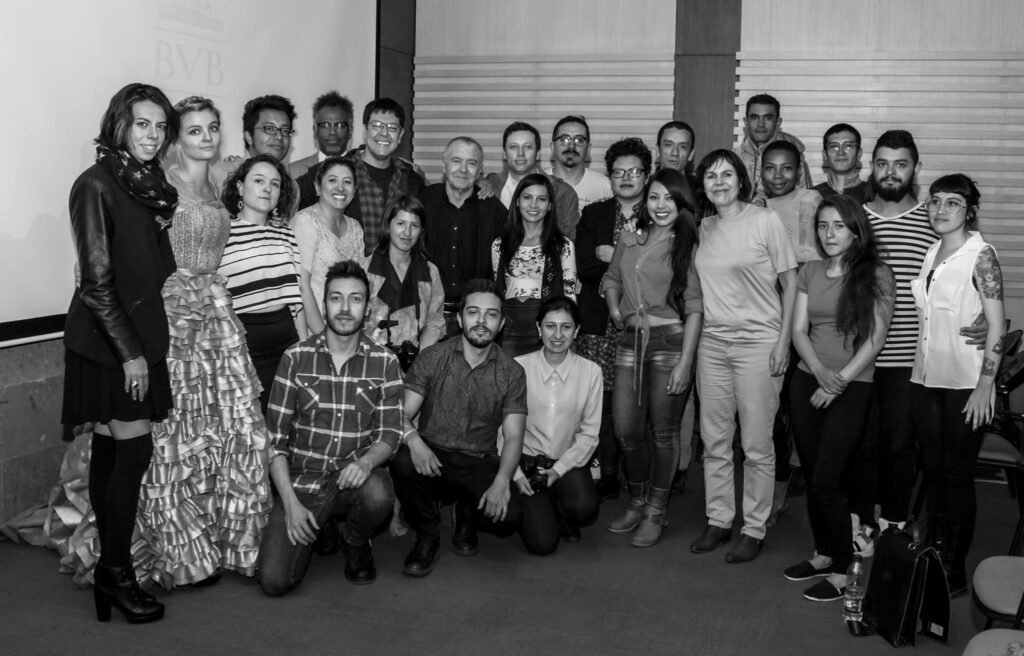
The Biennial organized a runway show featuring models wearing the garments created by the collectives. The collection titled Cápsula was crafted from Cambrel (spunbond non-woven fabric), a reusable material commonly used to make grocery bags.
The main collectives selected were:
- Sin Nombre: Inspired by the window bars and security shutters of the neighborhood, framing them as armor that prevents others from seeing us while we observe them.
- Los Tales: Based their proposal on security issues in the Venecia neighborhood. Working alongside local police officers from the CAI (Immediate Attention Center) and local government officials, they identified specific crimes, including el cosquilleo (pickpocketing objects without the victim noticing); el camaleón (thieves who wear multiple jackets to change rapidly and evade authorities); and criminals concealing stolen goods within their clothing.
- Personal Femenino: Centered their three outfits on the theme of prostitution. Through their research into sex workers’ lives, they identified distinct stages: starting around age 12; their most financially productive phase between ages 12 and 18; creating performance and dance dynamics to attract clients between 18 and 25; and after age 25, adopting the strategy of sitting down to talk with clients to keep them engaged.
- Aqua Alta: Focused on the phenomenon of rising water levels in Venice, Italy, while connecting it to the flooding of the Tunjuelito River and its impact on residents in neighboring areas.
- Versus: Based their work on two elements: the massive influx of Chinese merchandise and the geometric decoration on neighborhood house facades.
- [ x + y ]: Took inspiration from Pope Paul VI’s visit to the Venecia neighborhood in 1968 and his donation of papal vestments to the local Santa Cecilia church.
- Venecia’Style: Addressed automatic consumption, lifespan, and planned obsolescence. The collective developed its proposal around concepts of contemporary luxury, modern slavery, and eco-sustainability.
- Sublime: Focused on dye-sublimation textile printing, a highly polluting technique. According to the collective, the vapors emitted by sublimation machinery can harm the lungs, liver, kidneys, thyroid, and skin of operators.
The event worked in partnership with the Bogotá Chamber of Commerce, the Embassy of France, the Museum of Costumes of Bogotá, LCI Bogotá (La Salle College), and a3 (Academia Abierta para las Artes). The jury members for the project included Gilles Lipovetsky, Nicole Joye, Nicolas Bourriaud, and Ramiro Camelo.
The Origins of the Biennial
The Venice Biennial of Bogotá (Bienal de Venecia de Bogotá) was born in 1995. The initial ideas emerged while Franklin Aguirre, director of the event, was studying fine arts at the National University of Colombia (Universidad Nacional de Colombia) in the «Art in Context» class taught by Professor Ivonne Pini. The course explored various formats for art and its circulation, such as biennials, auctions, residencies, and art fairs.
Two fundamental factors made Aguirre and his peers feel excluded from such events: the extensive list of prerequisites to participate, which they did not meet at the time, and the fact that international events—such as the Venice Biennale in Italy, Documenta Kassel in Germany, or the São Paulo Biennial in Brazil—were treated as the primary spaces for artist validation.
“You don’t get validated in your own birthplace. That was the reason we began questioning the necessity of going abroad just to gain legitimacy—it reflects a colonial mindset toward our situation. We wanted to create an alternative format to that habit of having to leave in order to achieve recognition,” says Aguirre.
Venecia’Style: Raza esclava
As General Director of the Venecia’Style collective, I led the development of the project and art-fashion micro-collection Raza esclava (Slave Race), presented at the Costume Museum (Museo de Trajes) of Bogotá as part of the 8th Venice Biennial of Bogotá (BVB).
The project featured a micro-collection of three conceptual garments and an art fashion film. The work was the culmination of an intensive research process, textile experimentation, and relational community workshops in the Venecia neighborhood (Tunjuelito district). Drawing inspiration from overproduction, planned obsolescence, global value chains, and fashion history, the project critically examined contemporary luxury, modern slavery, and eco-sustainability.
Project Credits:
Venice Biennial of Bogotá Direction: Franklin Aguirre, César Ramírez General Direction SLAVE RACE: Lalula Vivenzi Carrasco Wardrobe and Styling: Lalula Vivenzi Relational Process: Lalula Vivenzi, Natalia Manzo Salazar Cinematography: Camilo G. Cer Script: Camilo G. Cer, Lalula Vivenzi Carrasco, Daniel S. Barbosa Messier Camera: Camilo Giraldo, Daniel Barbosa Editing: Daniel Barbosa Fashion Film Assistance: David Kmilo, Daniel Ramírez Aerial Footage: Diego Laverde Wardrobe Assistance: Nata Dávila Fashion Film Models: Cristina Warner, Giorginna Carrera, Laura Camila Sánchez Make-up Design: María José Sánchez Uribe Make-up: María José Sánchez, Alejandro Romero, Giuliana García Rubio Illustration and Printables: Daniel Jaramillo, Nathalie Chaparro Rivera Collaborating Models: Daniela Izaciga, Adriana Camacho Textile Experimentation: Goske Rojo, Rubén Romero, Elkin Duván Güiza Ortiz Text Editing: Camilo Guerrero Villegas, Edith Sierra Montaño, Lalula Vivenzi, Mario Neuta Salamanca, María José Sánchez Footwear: Martí Shoes Design Runway Make-up: Juanis Sarmiento Gavassa Runway Models: Victoria Crovo Gómez, Elena Crovo Gómez, Laura Camila Sánchez, Nata Aldana, Paola Estefanía Sánchez Special Thanks: Juan Manuel Martí, Marcela Vera, David Canéva, Laura Di Pietro, Felipe Parra, Manu Mojito, Alejo Era So, Claudia Montaña, Fabián Acosta, Fabián Ramos, Chris Hernández, LABLOOM, Teatro de Cámara Rubén Di Pietro, Cristina Warner, Estudio74.