
slave race
Collective director. Fashion, Photography, Fashion Film, 2015 – 2016
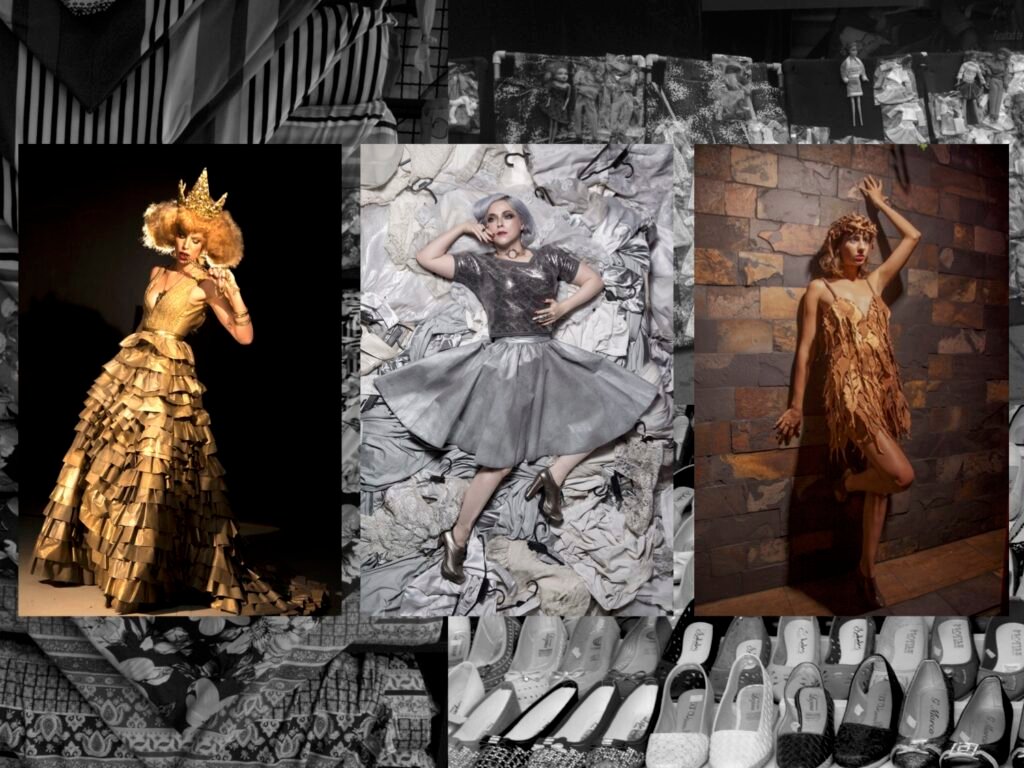
The project Raza Esclava, within the framework of the Venecia Biennale of Bogotá, presented at the Costume Museum a micro fashion collection composed of three outfits and a fashion film as works of art, the result of a research process and working sessions in the Venecia neighborhood of the Tunjuelito locality. The project is inspired by overproduction, the value chain of the fashion industry, and the history and evolution of fashion itself.
Lalula Vivenzi Carrasco participated in 2016 in the presentation of the projects developed within the Venecia Biennale of Bogotá, presenting the work developed as director of the Venecia Style collective. The video accompanying this narrative is one of the final works of the Raza Esclava project: a fashion film conceived together with a micro collection of three outfits, designed and produced as contemporary works of art.
Raza Esclava emerged from a process of research, collective creation, and workshops carried out in the Venecia neighborhood, in the locality of Tunjuelito. The project critically addressed overproduction, the value chain of the fashion system, and the historical relationships between body, labor, consumption, and representation. Fashion was used not as an aesthetic end, but as a political language and a device for social interpretation, shifting it toward the field of art and critical reflection.
The consumption of slavery
The Venecia Style collective developed the project Raza Esclava, conceived as a critical reflection on contemporary slavery and on consumption dynamics in the fashion industry. Starting from the assumption that slavery persists in current forms, the collective identified in the Venecia neighborhood of Bogotá a concrete example of these relationships: densely populated urban perimeters, with limited resources, where survival is articulated through the consumption and commercialization of low-quality fashion products, made with low-cost labor and through highly polluting processes.
The project explored the effects of consumption habits as a living dynamic that influences people, investigating the individual’s capacity to respond to what they consume and how they consume it. The collective observed that, within the logic of contemporary hedonism, the object replaces the subject, giving rise to a parasitic relationship in which the item that grants social distinction takes the place of the individual’s potential and development, who inhabits a hyper-individualized space lacking the collective references of pre-global eras. This generates false needs, meaningless overproduction, environmental exploitation, and various forms of social slavery.
This awareness became the basis for designing new ideas and collective projects, with the certainty that it is possible to create, sustain, and expand autonomous and strategic cultural experiences.
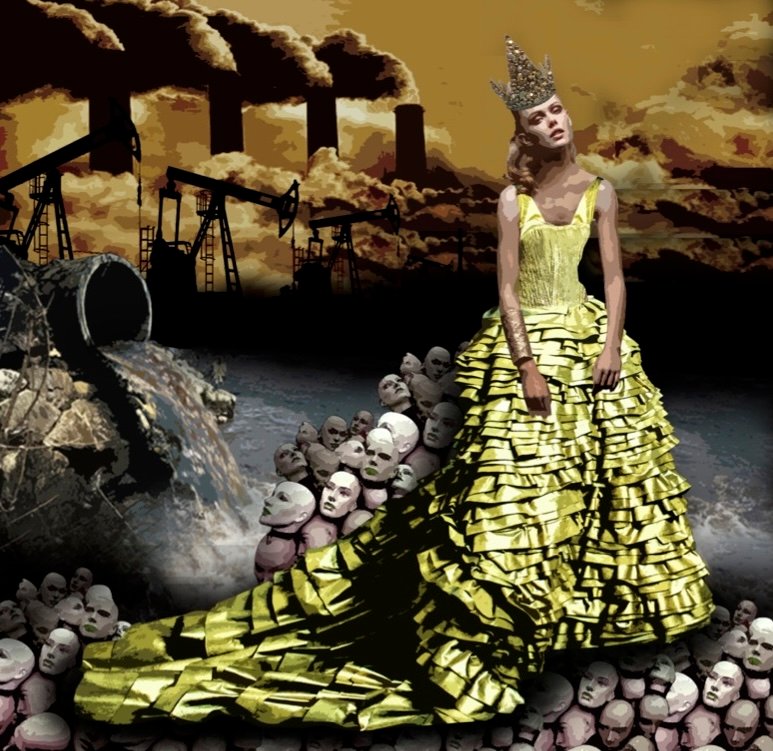
Deluxe
The garment is inspired by royalty and the 19th century—a time marked by the emergence of the first fashion boutiques and magazines. The golden color alludes to power and the accumulation of wealth and gold acquired by this enslaved figure, indifferent to the destruction of humanity and the planet.
She represents the highest tier of the consumer chain. This character carries a deeply perverse energy, simultaneously exuding sensuality, glamour, elegance, and power.
On Sale
The 1950s mark the onset of fashion’s industrial revolution and the advertising boom—a historical moment when aesthetic ideals began to be replicated uncontrollably. Within this context emerges the On Sale slave: a figure dazzled by the media-driven market who consumes by imitating the aesthetics of the Deluxe Slave, driven by the illusion of belonging to a ruling class she does not pertain to. The silver color, as a secondary precious metal, alludes to standard currency.

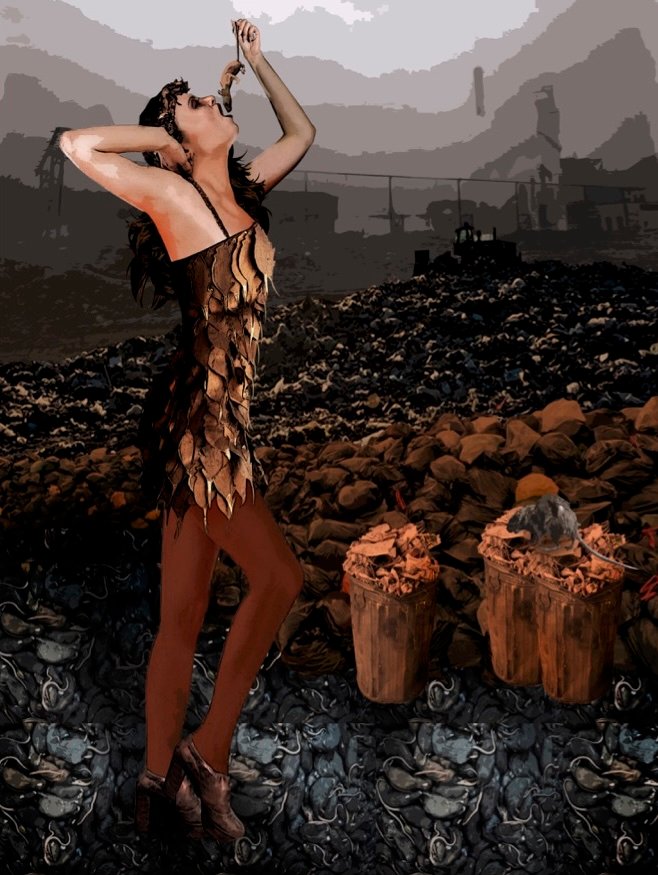
Machine
Born into the lowest strata of society, this enslaved figure performs the manual labor that supplies consumable goods to the upper social classes; she is the backbone used by industry to saturate an already overcrowded market. Machine represents women in the sweatshop industry, crafting garments for major fashion brands that they will almost certainly never be able to afford. The copper color of the suit references this metal, emblematic for being the most sought-after by recyclers and waste collectors.
Are we still building enslaved and subjugated societies



The Bogotá Biennale, an initiative born in 1995 thanks to the impulse of artist and curator Franklin Aguirre Rincón, occupies a singular place in the history of Colombian art. Conceived as a radical response to hegemonic models of exhibition and validation, the Biennale has, from the beginning, proposed a situated art, produced in direct dialogue with territory and communities, deliberately distancing itself from the autonomous object and elitist circuits.
More than an exhibition event, the Biennale has functioned as a social and pedagogical laboratory, where process, participation, and context are central. Its legacy has been fundamental for thinking relational, community-based, and critical artistic practices in Colombia, and it continues to be a reference point for projects that conceive art as a tool for thought, transformation, and collective action.
The participation of Lalula Vivenzi Carrasco in this context consolidated a way of understanding practice: hybrid, situated, and aware of its social implications, where fashion, art, and community intertwine as allied languages, capable of narrating what dominant discourses prefer to keep at the margins.
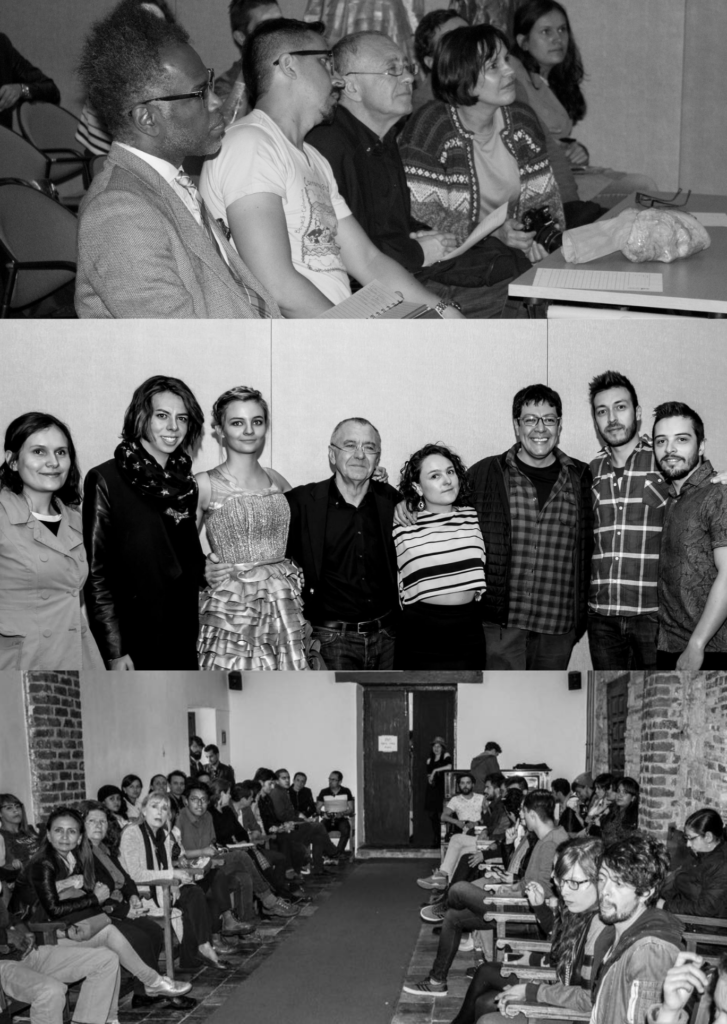
Raza Esclava was directed by Lalula Vivenzi Carrasco in collaboration with a heterogeneous team: cinematography and script by Camilo G Cer, editing by Daniel S Barbosa Messier, additional camera by Camilo Giraldo, fashion film assistance by David Kmilo and Daniel Ramírez, aerial footage by Diego Laverde, clothing and styling by Lalula with assistance from Nata Dávila, models Cristina Warner, Giorginna Carrera, and Laura Camila Sánchez, and makeup design and execution by María José Sánchez Uribe, with the support of Alejandro Romero and Giuliana García Rubio, integrating each phase of the project with creativity and commitment.
The experience was intense and deeply meaningful: coordinating and producing a project of such scale in a completely self-managed way taught the collective to plan, lead, and execute collective initiatives with limited resources, face unexpected challenges, and value collaboration as a creative engine. This learning became the foundation for developing new ideas and collective projects, with the certainty that it is possible to create, sustain, and expand autonomous and strategic cultural experiences.